|
January 6, 2001
Bio-Chemical Overview and Protecting Yourself
NOTE: This newsletter contains photos that might be disturbing.
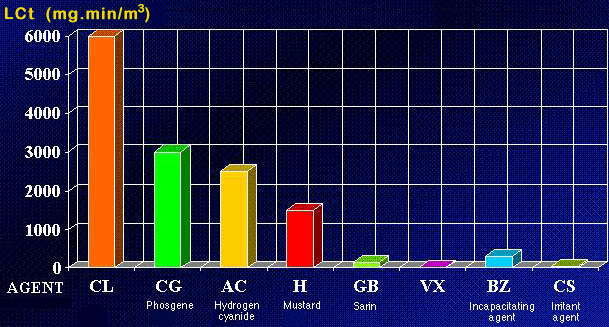
DEADLY DOSES
This chart gives comparative toxicity levels of some of the most widely used nerve agents. It shows that VX and sarin gas are extremely lethal.
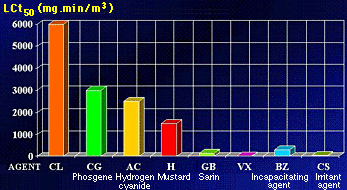 |
These values are estimates of the doses which have lethal effects on man. LCt50 expresses the dose at which 50% of the population will die as a result of their exposure. L stands for lethal, C for the concentration, t indicates length of exposure and 50 for 50% effect. Mg.min/m3 stands for milligrams per minute per cubic meter.
|
HOW NERVE AGENTS WORK
| In a healthy nerve, acetylcholine (green balls) is formed and released from the nerve cell. It then binds to a muscle cell receptor for a split second. In that second, the signal to bend an arm or breathe has been transferred from the nervous system to |
 |
the necessary muscle.
When the body has been exposed to a nerve agent, it interferes
with the signaling system used by the nervous system. The receptor
gets stuck in the "on" position and keeps signaling which leads
to muscle cramps.
SYMPTOMS - NOT A PRETTY SIGHT
Biological agents can take days for symptoms to show up, but chemical
agents' symptoms are visible in minutes OR hours. After an attack,
it's fairly easy to spot evidence of colored residue, dead foliage,
dead insects and animals. The best thing you can say about biological
terrorism is that high exposure means a quicker exit.
|
LOW EXPOSURE
|
MODERATE EXPOSURE
|
HIGH EXPOSURE
|
- Increased saliva
- Runny nose
- A feeling of pressure on the chest
- Pupils contract
- Impaired night-vision
- Short-range vision deteriorates
- Pain when focusing on nearby objects
- Tiredness
- Slurred speech
- Hallucinations
- Nausea
|
- "Low exposure" symptoms more pronounced
- Bronchoconstriction and mucous in the respiratory system makes
breathing difficult and induces
- Coughing
- Abdominal cramping
- Vomiting
- Loss of control of bowels and bladder
- Extreme saliva production
- Runny eyes
- Sweating
- Muscular weakness
- Local tremors or convulsions
|
- Muscular symptoms are more pronounced
- May suffer convulsions and lose consciousness
- Poisoning may be so rapid that earlier mentioned symptoms may
never have time to develop.
- The muscular paralysis affects the respiratory muscles.
- Nerve agents also affect the respiratory center of the central
nervous system.
- Both of these effects are the direct cause of death.
- Death caused by nerve agents is a kind of death by suffocation.
|
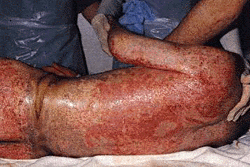
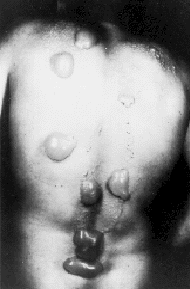
MUSTARD GAS
Victims of mustard gas attacks often experience eye injuries and
severe blistering. First symptoms don't show until 2-24 hours
after exposure.
Conjunctivitis (upper left) is a common problem after exposure.
Bottom left: an Iranian solder's mustard burns.
Far right: a man's back with typical blistering.
JA, SPEAKIN' SVEEDISH
Most countries now equip their troops with Swedish Auto Injectors.
It's simple to use and a soldier can easily give himself or another
person an injection straight into the muscle. Since nerve agents
work very quickly, having access to immediate medical treatment
is vital. If symptoms don't show improvement, a second shot can
be given within ten minutes.
|
 |
There are also antidote tablets which can be taken preventively. They aren't a cure-all but they reduce symptoms byabout 25%. Preplanning is required as the antidote needs to be taken at least 30 minutes before exposure; two hours in advance is better. The Swedish auto injector and tablets combined, provide the best protection until proper medical treatment can be given. That being said, the best protection is DEtection.
CHIPS AHOY!
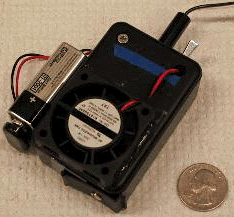 |
Last August, using a silicon chip and a diode laser from an inexpensive
CD player, chemists at the University of California, developed
a portable nerve-gas sensor capable of detecting "G-type" nerve
agents, like sarin, soman and GF.
This unit tracks deadly fumes right down to size of plume and
where it is traveling. Sensors work based on their ability to
pick up compounds with a phosphorus-fluorine chemical bond. The
inexpensive sensor works so well it can detect chemicals in the
parts per billion range.
In the future, for about $24 this device |
will be available to military personnel and police to use after terrorist attacks.
An added bonus is that this new invention is much more accurate than currently used detection methods and givesmuch fewer false alarms. Generally what is available to the military and police trickles down to the populace, so eventually these too may work their way into public domain. And now the rest of the story. . .
Continue
© Text and Graphics, 2001 Stan and Holly Deyo, except where otherwise
noted
|