|
January 6, 2001
Bio-Chemical Overview and Protecting Yourself
NOTE: This newsletter contains photos that might be disturbing.
BIOLOGICALS
Biological weapons are bacteria or viruses used to intentionally
harm people, animals, crops, water supplies or plants. They're
cheaper and easier to make than nuclear or chemical weapons, and
they can be equally or more devastating. The U.S. Office of Technology
Assessment estimated that a small private plane, with 220 pounds
(100 kg) of anthrax spores, flying over Washington on a clear,
windless night, could leave an invisible, odorless mist killing
between 1 million and 3 million people. It would have the impact
of something like two to six times the consequence of a one megaton
nuclear bomb.6
 |
|
|
AGENT
|
SYMPTOMS
|
INFECTION
|
VACCINE
|
| Tularemia |
Usually within 3-5 days after exposure, but as long as 2 weeks;
ulcers, swollen lymph nodes, fever and pneumonia appear. |
In its most severe forms, it is fatal in about 35% of untreated
cases within days or weeks.
|
The military has a vaccine, but treatment with antibiotics can
be effective, even when administered after days or weeks.
|
| Smallpox |
About 12 days after exposure, high fever, fatigue, back aches
begin, followed in 2-3 days by a rash and lesions on face, arms
and legs. |
As many as 30% of those infected may die, usually during the first
two weeks of illness.
|
Routine vaccinations ceased in 1972, but about 15 million does
are still available and more are in production.
|
| Plague |
Symptoms start 1-6 days after exposure, starting with high fever,
chills, headache and progressing quickly to severe breathing difficulty,
coughing blood.
|
Death follows within 2-4 days.
|
There is a vaccine for bubonic plague (carried by fleas) but it's
not effective against the aerosolized form of the disease. Antibiotic
treatment started within 24 hours of symptoms can improve the
chance of survival.
|
| Anthrax |
Begin within 6 days of exposure, with fever, fatigue, cough and
chest discomfort at first, followed by severe breathing difficulty,
sweating and turning blue.
|
Death follows 24-36 hours after severe symptoms begin.
|
Vaccines must be given 18 months prior to exposure to be fully
effective, though there is evidence of some protection after the
first three doses (given over 4 weeks.)
|
Viral
Hemorrhagic
Fever
|
Depending on the virus, (Ebola, Marburg, etc.) symptoms such as
high fever, muscle aches, chills and diarrhea begin within a few
days, followed by severe chest pain, shock and bleeding.
|
These diseases do not always result in death, but Ebola has been
up to 90% fatal in some outbreaks, with death occurring a week
after infection.
|
No vaccines exist for hemorrhagic fevers, except for yellow fever
and Argentine hemorrhagic fever.
|
Botulism
|
Symptoms begins 12 -36 hours after eating tainted food, including
double or blurred vision, slurred speech, difficulty swelling
and progressive weakness that descends the body, starting at the
shoulders.
|
Victims who ingest small doses may survive, but larger does can
cause paralysis of breathing muscles and death within 24 hours
unless patient is put on a ventilator.
|
The CDC keeps a national supply of anti-toxin, which must be given
quickly.
|
ESTIMATED CASUALTIES FOR BW ATTACK ON A CITY OF 500,000*7
|
AGENT
|
DOWNWIND
REACH (km)
|
DEAD
|
INCAPAC-
ITATED
|
LETHAL |
ROUTE
|
Rift Valley Fever
|
1
|
400
|
35,000
|
Yes |
Respiratory |
Tick-borne Encephalitis
|
1
|
9500
|
35,000
|
Incapacitating |
Respiratory |
Typhus
|
5
|
19,000
|
85,000
|
Yes |
Respiratory |
Brucellosis
|
10
|
500
|
100,000
|
Incapacitating |
Respiratory, Skin |
Q-fever
|
>20
|
150
|
125,000
|
Incapacitating |
Respiratory |
Tularemia
|
>20
|
125,000
|
30,000
|
Yes |
Respiratory |
Anthrax
|
>20
|
95,000
|
125,000
|
Yes |
Respiratory |
*Release of 110 pounds (50 kg) of agent by aircraft along a 1.2
mile (2 km) line
upwind of a population center of 500,000.
UGLY ANTHRAX
"A 1970 analysis by the World Health Organization concluded that
the release of aerosolized anthrax upwind of a population of 5,000,000
could lead to an estimated 250,000 casualties, of whom as many
as 100,000 could be expected to die.
"A later analysis, by the Office of Technology Assessment of the
U.S. Congress, estimated that 130,000 to 3 million deaths could
occur following the release of 100 kilograms of aerosolized anthrax
over Washington D.C., making such an attack as lethal as a hydrogen
bomb. The Centers for Disease Control and Prevention estimates
that such a bioterrorist attack would carry an economic burden
of $26.2 billion per 100,000 people exposed to the spores."8
"In a recent collection of studies on 21st century warfare issues
(6), a US Air Force medical officer, Lieutenant-Colonel Robert
Kadlec, wrote that under favourable meteorological conditions
100 kilograms of anthrax bacillus dropped by night on a city the
size of Washington would cover an area of 300 square kilometres
and could kill between one and three million people, in other
words "as many people as a comparably sized nuclear device.
"Lieutenant-Colonel Kadlec goes on to describe the chaos that
might ensue if a few kilograms of anthrax bacillus were released
in a city like New York: hundreds of thousands of deaths in the
first few days, thousands needing medical treatment or vaccination,
millions in a state of panic in urgent need of help."9
ANTHRAX AT WORK
One of the most feared BW germs is anthrax. Part of the reason is that it is so easily obtainable, extremely lethal, inexpensive and like greenhouse gases, it has staying power in the environment.
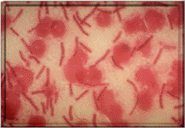
Anthraxis bacillus
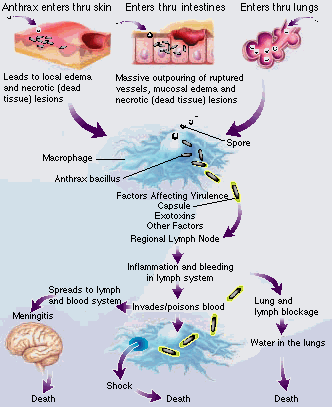
The graphic to the right shows that anthrax can enter through
the skin, or by breathing or ingesting it as in the case of contaminated
meats or other poisoned foods.
Once symptoms show up, treatment is generally too late for the
more lethal stains. Death generally results in one to seven days
after exposure and the intervening days are unbearable.
|
 |
CUTANEOUS ANTHRAX
-
 These are examples of the least deadly type of anthrax - cutaneous - meaning "through the skin". After entering, the infection begins as a raised itchy bump that looks like an insect bite. Within 1-2 days, it develops into a blister and then a painless ulcer, usually 1/2 to 1-1/4 inches (1-3 cm) across, with a characteristic black necrotic (dying) These are examples of the least deadly type of anthrax - cutaneous - meaning "through the skin". After entering, the infection begins as a raised itchy bump that looks like an insect bite. Within 1-2 days, it develops into a blister and then a painless ulcer, usually 1/2 to 1-1/4 inches (1-3 cm) across, with a characteristic black necrotic (dying) |
|

area in the center. Lymph glands in the surrounding area may swell. About 20% of untreated cases of cutaneous anthrax result in death though it is rare if treated with antimicrobial therapy.
|
- Photos courtesy of The New England Journal of Medicine
SYMPTOMS
When anthrax is inhaled, the first symptoms seem like a common
cold. (Remember The Stand? Those symptoms were like a "super flu".) There may even be a
day when the person seems almost well, but it's fleeting. After
several days, severe breathing problems occur along with shock.
Death usually results 1-2 days after acute symptoms show up.
The intestinal form of anthrax is just plain ugly characterized
by an acute inflammation of the intestinal tract. It is extremely
uncomfortable. The initial signs are nausea, loss of appetite,
vomiting and fever followed by abdominal pain, vomiting of blood,
and severe diarrhea. Once contracting intestinal anthrax, survival
rate is 40 - 75%.
After exposure, the most successful treatment is administered
early. Usually doctors prescribe penicillin, erythromycin, tetracycline,
or chloramphenicol. Left untreated, it is nearly always fatal.
Disinfect contaminated items by using a 0.05% hypochlorite solution
(1 tbps. bleach per gallon of water). Destroying the spores requires
steam sterilization.
ARE WE PREPARED FOR AN ATTACK?
The short answer from the highest government officials, doctors
and bio-chem experts is an emphatic "No!"
Denver's TOPOFF 10-day exercise involved the release of bubonic
plague in a bio-terrorist attack. We all heard about the much-touted
TOPOFF programs conducted in three major US cities last year.
Hugely suppressed, the Denver scenario was called off after four
days due to "sheer exhaustion of the participants and the 'practice
epidemic' was still expanding".
During Dr. Tara O'Toole's speech to the Center for Strategic and
International Studies, she made the following points about the
lack of preparedness for biowarfare in the U.S. If we are considered
"unprepared", the rest of the world is in even deeper doo since
US allies may be targeted as well and they've put in less effort.
- Bio-warfare can push nations beyond the point of recovery.
- A bio-weapons attack is not likely to stay "local"; it will spread
very quickly.
- Bio-weapons are strategic population destroying weapons which
sets them apart from other weapons of mass destruction.
- It is not easy to hide a nuclear reactor, but very easy to hide
a fermenter (device for "growing" bio-weapons).
- There is no clear line between civilian and military targets.
- Genetic engineered pathogens may well confuse a diagnosis making
it very difficult for doctors to respond in time.
- Most American doctors would not be able to recognize smallpox
or anthrax.
- Pharmaceutical companies do not possess surge capabilities in
case of an incident; they are entirely geared to just-in-time
deliveries.
- These days one can play Lego with the DNA of a bug and make it
more virulent and resistant to antibiotics.10
There are about 48 organisms that could be used offensively--25
viruses, 13 bacteria, 10 toxins. Is it impossible to defend against
all of these?
PROTECTION
Vaccinations may provide substantial protection against naturally occurring agents, and limited or no protection against genetically-
engineered variants designed to counter vaccines.
Most biological agents have no effect through intact skin, so respiratory masks and clothing would provide adequate protection for most people. After a short while, the danger recedes as sunlight and ambient temperatures destroy the agents. This
|
 |
is not true for anthrax. Off the coast of Scotland on Gruinard Island, anthrax spores remained active for 40 years after biological warfare tests were performed there in the 1940s.
The best protection is still detection.
GET IN SHAPE, STAY IN SHAPE
This is such a simple thing we can do and the benefits are endless.
I hate to even mention exercise since we've heard it till our
ears are bloody, but exercise DOES build the body's resistance
to disease, speeds recovery and relieves stress which is a major
contributor to illness. Thirty to 45 minutes of moderate exercise
daily - even something as simple as walking - goes a long way
to wipe out a multitude of "sins" and after Christmas, who hasn't
done a few food no-no's. <grin>
Further build up the immune system with smart living. That means
moderate alcohol and zero cigarettes. Illicit drugs, well, we
don't even need to go there. They put the "D" in dumb.
Vitamins aren't just for kids. Nearly everyone's immune system
can benefit from supplements of A, B6, C and E or an all-inclusive
multi-vitamin. Especially with long work hours, stressed lifestyles
and the era of fast food, processed food, prion-infested food
and genetically modified food, vitamins are essential to insure
getting proper nutrition. Vitamins are not a cure-all. They will
not make you immune to disease or bio-chemical weapons, but everything
works together for better health. We've only touched on the periphery,
but there are literally countless books on the market detailing
ways to improve health and heaps of web sites with free information.
DETECTION, THE BEST MEDICINE
A 1969 United Nations report estimated the expense to stockpile
gas masks, antibiotics, vaccines and other defensive measures
for civilians could exceed $20 billion. That figure, when adjusted
for inflation, would now be about $80 billion.11
A biological attack would be virtually impossible to detect in
its early stages. "Ideally we would like to develop a detection
system using something remote, like a laser beam that could detect
and identify a biological agent at standoff distances," says Assistant
Defense Secretary Harold Smith. That prospect is years away, so
the Pentagon is trying to develop a "point detector" that could
be mounted on a remote-
controlled vehicle. It should be able to sniff air samples and
determine within 15 minutes whether any of 26 dangerous agents
are present, according to Brig. Gen. John Doesburg.12
During the Gulf War, US and allied forces did not have reliable
biological agent detection systems. Since then, a number of detection
systems have been developed with more on the way including:
- SMART (Sensitive Membrane Antigen Rapid Test)
- JBPDS (Joint Biological Point Detection System)
- BIDS (Biological Integrated Detection System)
- IBAD (Interim Biological Agent Detector)
BIDS - BIOLOGICAL INTEGRATED DETECTION SYSTEM
The best detector now is a Humvee mounted with what appears to be a small Hansel and Gretel house with three chimneys. It comes with a few drawbacks:
|
1) requires two people to operate
2) requires 30 to 45 minutes to identify an agent
3) can only identify four agents at once: anthrax, bubonic plague, botulism and staphylococcus
|

|
BIDS works by exposing air samples to antibodies that react with
a particular BW agent. If positive, a reaction takes place in
~30 minutes. Testing for BIDS identifying other agents by this
same method are in progress. Since there are literally scores
of organisms and toxins, it is unknown whether or not BIDS will
be able to detect the full range. The DoD has already tested an
improved version, the Air Base/Port Biological Detection system,
at bases in two hotspots: South Korea and Saudi Arabia.
ROOM FOR IMPROVEMENT
In light of the government openly saying "Houston, we have a problem,"
it's understandable if you're getting a creepy feeling up your
spine about now. Reality-tilted leaders like Saddam Hussein and
Osama bin Laden are able to brainwash thousands and thousands
of people to do their bidding and to sanction their actions. But
do they possess bio-chemical weapons? We'll find out in Part 5
of this NBC series.
Factor in technology getting smaller, faster, lighter, it enables
those who wish us harm to better facilitate their intentions.
The CIA publicly states they expect biological and chemical acts
of terrorism in the near future. Silly thought? Of course, not.
Why else would the country spend millions on practice drills and
billions more on BC defense. Why else was the military embroiled
in a hotly contested anthrax vaccination program. Why would President
Clinton sign into effect, three Presidential Directives addressing
terrorism? Why are 120 major cities being trained to deal with
NBC attacks? If you think the government has it all under control,
ask yourself in your heart of hearts, do you feel comfortable?
In Part 4, we'll look at "Setting the Nuclear Stage and Protecting Yourself". If you missed the previous issues in NBC series, here are parts
1 and 2: "Part 1 - Terrorism Sneaks Ashore" and "Part 2 - Who Are The Players?"
With affection,
Holly and Stan
Seismo and Taco
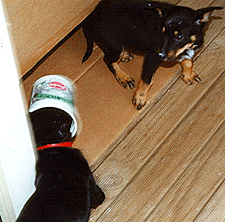
Taco: "SEISMO! What in Heaven's name are you doing?"
Seismo: "Huh? I can't hear you."
Taco: "Gee, what a surprise. Why've you got a yogurt carton on your head?"
Seismo: "Well, for one thing, it's stuck."
Taco: "Duh!" (she mutters, but can't help snickering)
Seismo: "For two, I'm practicing for an NBC attack."
Taco: "Seis, sweetie, I don't think inhaling yogurt bacteria is quite going to do the trick."
Seismo: "Maybe not, but it'll smell a whole lot better!"
Taco: "Uh-oh, if this is your idea of protection, we're in a heap o' trouble. . ."
|
 |
Stan and Holly Deyo
http://millennium-ark.net/
© Text and Graphics, 2001 Stan and Holly Deyo, except where otherwise
noted
Sources:
1Global Trends 2015: A Dialogue About the Future With Nongovernment
Experts; http://www.odci.gov/cia/publications/globaltrends2015/index.html
2Ibid
3The Threat Of Chemical and Biological Attack, Is America Prepared?;
Steve Macko, ENN Editor, Clark Staten, Analyst; http://www.emergency.com/chembio3.htm
4The Specter of Biological Weapons; http://www.sciam.com/1296issue/1296cole.html
5Biological Warfare And Its Cutaneous Manifestations; Thomas W.
McGovern, MD, MAJ, MC and George W. Christopher, LTC, USAF, MC;
http://www.geocities.com/Pentagon/Quarters/4389/index.html
6Health Aspects of Chemical and Biological Weapons, WHO, 1970;
(Source: Biological Warfare: A Historical Perspective)
7U.S. Secretary of Defense, Gives An Overview of the Bio-weapons
Threat and the Measures Being Taken for U.S. Bio-defenses; PBS;
1998; http://www.pbs.org/wgbh/pages/frontline/shows/plague/interviews/cohen.html
8Center For Civilian For Biodefense Studies; http://www.hopkins-biodefense.org/pages/agents/agentanthrax.html
9The Spectre of Bioterrorism; July 1998; http://www.monde-diplomatique.fr/en/1998/07
/09bio1
10Ibid #6
11US News & World Report; May 12, 1997http://www.usnews.com/usnews/issue/970512/12biow.htm
12The Specter of Biological Weapons; http://www.sciam.com/1296issue/1296cole.html
Additinal Sources:
UCSD Chemists Develop Portable Nerve Gas Sensor; August 22, 2000;
http://ucsdnews.ucsd.edu/newsrel/science/mcnerve.htm
Chemical Warfare Agents; http://www.opcw.nl/chemhaz/cwagents.htm
Biological Weapons FAQ v. 0.44, June 15, 2000;
http://www.ocean.ic.net/ftp/doc/disaster/bio/biowfaq.html
|